Mom: Choose a book and I'll buy it for you.
Son: I want THIS one!
Mom: I'm NOT buying that for you. It's too young.
Son: But I really, really, really want this one. Pleease.
Mom: That book is too babyish for you. It's called Now We Are Six--but YOU just turned seven.
I wanted to pop out from behind the shelves and 1. inform the mom that her son had made an excellent choice, having selected an ageless, timeles, classic poetry book; 2. read them "Sneezles", one of my favorite poems in the book; and 3. buy one copy of the book for myself and another for the boy.) But knowing it really wasn't my business, I did nothing.
As a parent, I understand how the mom might want her 7-year-old to choose a book that's right for his reading level. But as a book lover who is passionate about choosing her own books, I can't help but wish for children to be allowed a similar freedom.
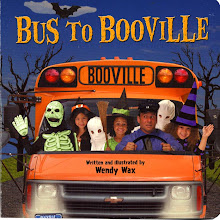
As a children's book author, I participate in many book fairs and often hear parents trying to steer their children into making the "right" book choices. I'm so used to this that when a child is interested in my picture book City Witch, Country Switch, I automatically tell the parents that it's not a Halloween book. Why? Because younger kids who fall in love Bus to Booville or You Can't Scare Me--two of my books that ARE Halloween books--are often told "no because it's not Halloween," as if kids don't love monsters, ghosts, and spooky stuff all year around!
When a child really, really, really wants a book, what's wrong with responding with an automatic "no"?
1. The child might feel he makes poor choices.
As a children's book author, I participate in many book fairs and often hear parents trying to steer their children into making the "right" book choices. I'm so used to this that when a child is interested in my picture book City Witch, Country Switch, I automatically tell the parents that it's not a Halloween book. Why? Because younger kids who fall in love Bus to Booville or You Can't Scare Me--two of my books that ARE Halloween books--are often told "no because it's not Halloween," as if kids don't love monsters, ghosts, and spooky stuff all year around!
When a child really, really, really wants a book, what's wrong with responding with an automatic "no"?
1. The child might feel he makes poor choices.
2. It robs him of the chance to explore, enjoy, and learn from a book she was drawn to.
3. It implies that there's a "right" and "wrong" answer in choosing a book. When a parent asks the child to "choose" a book, shouldn't he/she be able to do just that?
If your child buys a book that's too easy, so what. Suggest he read it to a younger kid. If he chooses a book that's too difficult, either read it to him or save it until he grows into it. If the book never gets read, arrange for your child to donate it to a library or charity. It's all good! And your child will know that you value his taste in books.
If your child buys a book that's too easy, so what. Suggest he read it to a younger kid. If he chooses a book that's too difficult, either read it to him or save it until he grows into it. If the book never gets read, arrange for your child to donate it to a library or charity. It's all good! And your child will know that you value his taste in books.
My 9-year-old son has always gravitated to non-fiction books way above his level. If I'd said no because of reading level, he'd never have gotten frustrated with the words...and I'd never have ended up reading to him...and he'd never have learned as much as he knows now about spies, mummies, pyramids, pirates, venomous creatures, and World War II as he does. Did my son learn to read? Of course--all kids do. But because his earlier book choices were not on his level, he now knows more than I did at his age, and he chooses his books with confidence and excitement.
Fortunately, there are plenty of parents who leave the book choice up to their child--regardless of level. Many adults still enjoy their childhood favorites like I do--which reminds me. I'm going to read A. A. Milne's poem Sneezles before my son comes home from school. I hope a copy finds its way to the boy from Barnes &Noble via a librarian, teacher, grandma, or--better yet--his mom who eventually comes to her senses.









 Posts
Posts

