
Friday, November 19, 2010
BUG ART


Wednesday, November 17, 2010
Who Took the Quiet Out of Libraries?
The other day, I brought my laptop to the library and began working on a middle-grade manuscript I'm writing. The library was so noisy, I could barely concentrate. I looked around and saw a few people talking to each other, but the real noise was coming from the librarians! I went up to their desk and kindly asked them to please keep it down. They said they would but then kept yapping away. Again, I went up to them and asked them to please be quiet. I was told by a librarian in his 20s that if I wanted quiet, I should go into The Quiet Room. He pointed to a small room through whose glass I could see several people sitting around a table. It looked claustrophobic. I much preferred the cubicle-desk that I'd been lucky enough to get. I went back to work and did get a bit of quiet while the librarians had gone their separate ways among the shelves. But then the guy librarian came back and started a LOUD conversation with a woman who had come to check out a book. I marched up to him and said, "Look--this is a library. It's supposed to be quiet, and you're supposed to be quiet." He smiled at me--as if he'd been anticipating this encounter--and said, "Actually, you're wrong. Libraries used to be quiet. Today's libraries are community centers for people who have nowhere else to go." I didn't believe him, but after mailing my complaint to the library's board of directors, I got a letter saying that yes, it is true: "Libraries are the new community centers, but they have a lovely Quiet Room...." I thought it might just be that library, but when I googled it, I saw that the library was right, I was wrong. When did this happen? I've been taking my 10-year-old son to the library since he was a toddler. Why didn't I know about it? I'm glad people who didn't have a place to chat now have one, but I have to say, I miss that old "Be quiet in the library" rule. Do you?
Tuesday, February 23, 2010
Who's Afraid of the Big, Bad Idea-Snatcher?
I have a friend who has such a great idea for a children's book, she can't tell anyone (including me) her idea because she's afraid someone might steal it. She's not the only one. It seems that many people I meet, who have a children's book idea or manuscript locked away somewhere, never pursue getting it published because of this same fear. (Some are lawyers--so I guess it's their job to be fearful.)
Personally, I think it's a waste of energy to worry about idea-snatchers. There are trillions of ideas out there and what are the chances that someone will choose your idea, as unique as it is? I'm not saying you should post your best ideas on Facebook or Twitter or on a billboard in Times Square, but I do think you'll be better off channeling that worry-energy into something more creative.
Have I ever had an idea stolen? Yes--and not just an idea. One day I was at Barnes & Noble and saw that a book I had written--same title, same text, and illustrations that followed my art notes--had been published under the name of an illustrator I had hired to do a sample illustration for my book. How dare she?! I thought at the time, and I was pretty bummed out. I got a lawyer, scrounged around for correspondence, and didn't believe her story about how she had tried to track me down (not a difficult task) to ask my permission. Case over; her book is still out there.
But even still...I got over it and, in the long run, went on to write books I liked better than that one. The more I write, the more ideas I have, and the more ideas I have, the less time I have to write them all down. I believe that's true for most children's book writers. If I'm every stuck for ideas, I just go to New York City and look up at the thousands of windows everywhere, and remember that there is a world of stories that haven't yet been written--or at least not in the way I would do it.
If someone steals your idea, take it as a compliment and know you'll come up with another one...or two...or ten. Look up at the city windows or twinkling stars and remember that you live in a world of abundance. Old ideas are always being recycled; new ideas pop up when you least expect them.
If someone steals your idea, take it as a compliment and know you'll come up with another one...or two...or ten. Look up at the city windows or twinkling stars and remember that you live in a world of abundance. Old ideas are always being recycled; new ideas pop up when you least expect them.
Tuesday, February 2, 2010
If a Child Really, Really, Really Wants a Book, Why Insist He/She Buy a Different One?
I hadn't thought of the classic Now We Are Six, by A. A. Milne, in years--and then I overheard this conversation in a Barnes & Noble:
Mom: Choose a book and I'll buy it for you.
Son: I want THIS one!
Mom: I'm NOT buying that for you. It's too young.
Son: But I really, really, really want this one. Pleease.
Mom: That book is too babyish for you. It's called Now We Are Six--but YOU just turned seven.
I wanted to pop out from behind the shelves and 1. inform the mom that her son had made an excellent choice, having selected an ageless, timeles, classic poetry book; 2. read them "Sneezles", one of my favorite poems in the book; and 3. buy one copy of the book for myself and another for the boy.) But knowing it really wasn't my business, I did nothing.
As a parent, I understand how the mom might want her 7-year-old to choose a book that's right for his reading level. But as a book lover who is passionate about choosing her own books, I can't help but wish for children to be allowed a similar freedom.
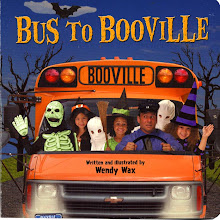
As a children's book author, I participate in many book fairs and often hear parents trying to steer their children into making the "right" book choices. I'm so used to this that when a child is interested in my picture book City Witch, Country Switch, I automatically tell the parents that it's not a Halloween book. Why? Because younger kids who fall in love Bus to Booville or You Can't Scare Me--two of my books that ARE Halloween books--are often told "no because it's not Halloween," as if kids don't love monsters, ghosts, and spooky stuff all year around!
When a child really, really, really wants a book, what's wrong with responding with an automatic "no"?
1. The child might feel he makes poor choices.
As a children's book author, I participate in many book fairs and often hear parents trying to steer their children into making the "right" book choices. I'm so used to this that when a child is interested in my picture book City Witch, Country Switch, I automatically tell the parents that it's not a Halloween book. Why? Because younger kids who fall in love Bus to Booville or You Can't Scare Me--two of my books that ARE Halloween books--are often told "no because it's not Halloween," as if kids don't love monsters, ghosts, and spooky stuff all year around!
When a child really, really, really wants a book, what's wrong with responding with an automatic "no"?
1. The child might feel he makes poor choices.
2. It robs him of the chance to explore, enjoy, and learn from a book she was drawn to.
3. It implies that there's a "right" and "wrong" answer in choosing a book. When a parent asks the child to "choose" a book, shouldn't he/she be able to do just that?
If your child buys a book that's too easy, so what. Suggest he read it to a younger kid. If he chooses a book that's too difficult, either read it to him or save it until he grows into it. If the book never gets read, arrange for your child to donate it to a library or charity. It's all good! And your child will know that you value his taste in books.
If your child buys a book that's too easy, so what. Suggest he read it to a younger kid. If he chooses a book that's too difficult, either read it to him or save it until he grows into it. If the book never gets read, arrange for your child to donate it to a library or charity. It's all good! And your child will know that you value his taste in books.
My 9-year-old son has always gravitated to non-fiction books way above his level. If I'd said no because of reading level, he'd never have gotten frustrated with the words...and I'd never have ended up reading to him...and he'd never have learned as much as he knows now about spies, mummies, pyramids, pirates, venomous creatures, and World War II as he does. Did my son learn to read? Of course--all kids do. But because his earlier book choices were not on his level, he now knows more than I did at his age, and he chooses his books with confidence and excitement.
Fortunately, there are plenty of parents who leave the book choice up to their child--regardless of level. Many adults still enjoy their childhood favorites like I do--which reminds me. I'm going to read A. A. Milne's poem Sneezles before my son comes home from school. I hope a copy finds its way to the boy from Barnes &Noble via a librarian, teacher, grandma, or--better yet--his mom who eventually comes to her senses.
Monday, January 25, 2010
You Wrote a Children's Picture Book--So NOW What?
Everyone has an unpublished children's story somewhere in a drawer--at least it seems that way to me. "Can you help me get my book published?" I'm always being asked.
I wish I did have a magic wand that could publish the stories of my choice (including my own!). But the best I can offer are 10 tips to help you determine whether your picture book manuscript is ready to be submitted to a publisher.
1. YOU like your story, but will parents and kids choose it over the bookstore's competing bestsellers? Go to Barnes & Noble and read as many new books as you can in your story's category. These days children's books are pretty sophisticated, so if your story was written when your 20-year-old was 4, it probably needs freshening up.
2. Clichés make editors yawn. Not that talking animals; the shy, new kid who tries to fit in; or the red-headed tomboy are taboo--but if you use them, make sure they're surprisingly fresh.
3. Teachy-preachy is no good. If your story involves a "lesson," bury it deep, deep, deep beneath an engaging character and story. (In Maurice Sendak's Pierre, Pierre learns not to say "I don't care" when his indifference leads him to be eaten by a lion!)
7. Having a major dramatic question (MDQ) is a must! What is your character trying to achieve? This question must be obvious at least 1/3 of the way through and must be answered by the end of the book. Your character must actively pursue his/her goal and go through some sort of change to get there.
I wish I did have a magic wand that could publish the stories of my choice (including my own!). But the best I can offer are 10 tips to help you determine whether your picture book manuscript is ready to be submitted to a publisher.
1. YOU like your story, but will parents and kids choose it over the bookstore's competing bestsellers? Go to Barnes & Noble and read as many new books as you can in your story's category. These days children's books are pretty sophisticated, so if your story was written when your 20-year-old was 4, it probably needs freshening up.
2. Clichés make editors yawn. Not that talking animals; the shy, new kid who tries to fit in; or the red-headed tomboy are taboo--but if you use them, make sure they're surprisingly fresh.
3. Teachy-preachy is no good. If your story involves a "lesson," bury it deep, deep, deep beneath an engaging character and story. (In Maurice Sendak's Pierre, Pierre learns not to say "I don't care" when his indifference leads him to be eaten by a lion!)
4. Does your story work on more than one level? For parents to shell out money for a picture book these days, it's usually for a book that can be read again and again and again.
5. If your first sentence doesn't grab the reader, what will? When it comes to titles, first sentences, and endings, there are infinite possibilities. I write pages and pages of each until I find the winning one. I like Arthur Yorinks beginning to Louis the Fish: "One day last spring, Louis, a butcher, turned into a fish." Endings have endless possibilities--think surprise, twist, humor.... have fun with it!
5. If your first sentence doesn't grab the reader, what will? When it comes to titles, first sentences, and endings, there are infinite possibilities. I write pages and pages of each until I find the winning one. I like Arthur Yorinks beginning to Louis the Fish: "One day last spring, Louis, a butcher, turned into a fish." Endings have endless possibilities--think surprise, twist, humor.... have fun with it!
6. Make sure your book hasn't already been written. Do title and subject searches on Amazon. If your idea has been done but not for several years, I wouldn't worry about it. If your idea is all over the place, make sure it's obvious that yours is completely different or go back to the computer and write something else.
7. Having a major dramatic question (MDQ) is a must! What is your character trying to achieve? This question must be obvious at least 1/3 of the way through and must be answered by the end of the book. Your character must actively pursue his/her goal and go through some sort of change to get there.
8. Humor is good. If you can keep kids (and adults) laughing throughout you've probably got a winner.
9. If you're trying to find an illustrator for your story, don't bother. Editors prefer to choose their own illustrators unless the author is also an illustrator. Many editors say don't include art notes but I include brief notes where they're needed. If, say, an armadillo must appear in the art but isn't in the text, you'd need to note this.
10. Editors say they have no interest in rhyming books. If I had listened to this, City Witch, Country Switch, Bus to Booville, Look Who's Buzzing, Animal Family Christmas, You Can't Scare Me, A Very Mice Christmas, and Class Picture Day--all rhyming books--would still be sitting in a Folder on my Desktop. If you're good at rhyming, and can avoid grabbing at contrived words to make something work, go for it!
Good luck!
Subscribe to:
Posts (Atom)









 Posts
Posts

